
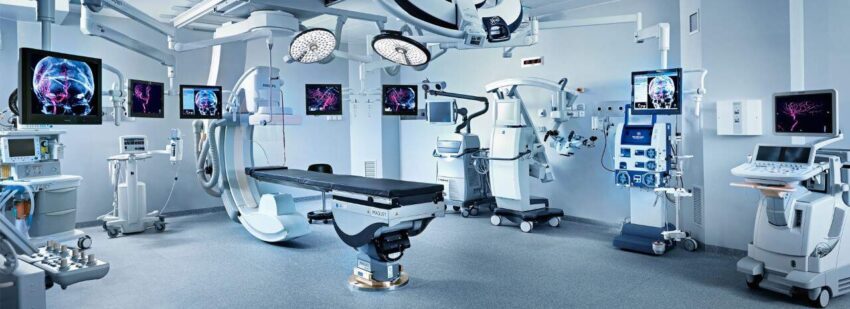
Medical imaging devices are instruments used to visualise the interior of the human body for clinical analysis and medical intervention, as well as visualisation of functional and physiological processes. Some common medical imaging techniques include X-ray radiography, ultrasound, computed tomography (CT), magnetic resonance imaging (MRI), positron emission tomography (PET), and single-photon emission computed tomography (SPECT). Each modality provides different information about the body and is suited to image specific tissues and organs. Medical imaging also guides interventional medical procedures such as biopsy, catheter placement, and cryoablation.
Advancements in CT and MRI Technology
Computed tomography (CT) and magnetic resonance imaging (MRI) are two of the most commonly used medical imaging modalities. They have undergone major technological advancements in recent years, allowing for higher resolution images and better tissue differentiation. Multidetector CT systems can acquire images much faster than previous generations. Dual-energy CT uses two different energy settings to provide additional material differentiation capabilities. New MRI techniques like steady-state free precession enable ultra-fast cardiac imaging. Performance of both CT and MRI has improved dramatically with the development of stronger magnets, better coils, more sophisticated pulse sequences, parallel imaging, and other refinements.
The Global Medical Imaging Devices by rising healthcare spending, an aging population susceptible to chronic diseases and medical conditions, and technological innovations enhancing imaging capabilities. North America currently dominates due to reimbursement supporting high-cost devices, while the Asia Pacific region is expected to see the fastest More advanced economies are seeing increasing uptake of new technologies like dedicated cardiac CT systems and low-field MRI, while emerging are working to expand basic access.
Application of Medical Imaging in Oncology
Medical imaging devices plays a crucial role in cancer diagnosis and treatment. Various imaging modalities are used for cancer screening, detecting tumors, staging and characterizing cancers, guiding biopsies, and monitoring responses to therapy. Screening mammograms and low-dose CT scans of the lungs are effective non-invasive ways to detect breast and lung cancers at early, more treatable stages. CT and PET/CT provide whole body views to determine if cancer has spread from the primary site. MRI is often preferable to CT for imaging the brain and spinal cord. Ultrasound helps guide tissue sampling under imaging guidance. Following treatment, repeat imaging exams are done to measure tumor shrinkage or detect recurrence. Novel PET tracers also show promise for detecting cancer at the molecular level.
Advancing Paediatric Medical Imaging
Medical imaging of children poses unique technical challenges due to their smaller anatomies and need to limit radiation exposure. Until recently, sedation was often required for CT and MRI exams. However, new faster and higher quality scanners have helped minimize the need for sedation in many cases, leading to shorter exams and improved comfort for paediatric patients. Software tools are being developed to automatically adapt scans based on a child’s age and size. Dedicated paediatric CT and MRI systems with shorter bores provide a more child-friendly environment compared to standard adult machines. Use of alternate modalities like ultrasound is also prominent in paediatrics due to lack of ionizing radiation. Overall, medical imaging plays a key role in the diagnosis and treatment monitoring of many conditions affecting children.
Rising Role of Interventional Radiology
Interventional radiology combines imaging guidance and miniature instruments to diagnose and treat medical problems minimally invasively. It is less traumatic for patients and associated with shorter hospital stays compared to open surgery. Common interventional radiology procedures include angiography, angioplasty and stenting, thrombolysis for clots, biopsy of tumors,fluid drainage,vertebroplasty for strengthening fractured bones, and placement of vascular access ports, stents, and catheters. CT, MRI, fluoroscopy, and ultrasound are commonly used to visualize blood vessels, tissues, and organs during procedures. The incorporation of interventional radiology is steadily growing for diseases in areas such as oncology, urology, gastroenterology, and cardiology. This has spurred new device development in areas including advanced vascular embolization coils and biodegradable stents.
Adoption of Artificial Intelligence in Medical Imaging
Artificial intelligence (AI) techniques such as deep learning show enormous promise for medical imaging applications. AI can help detect subtle abnormalities, prioritize caseloads, automate workflows and reporting. For example, AI has been used to analyze mammograms, chest X-rays, head CT scans, and MRI scans to help radiologists detect cancers, lesions, strokes and other anomalies that may have been missed on human review alone. Predictive models built on vast datasets help physicians estimate disease prognosis, best treatment options and likelihood of complications. Major challenges remain around data availability, model validation, and integration into clinical systems. Nevertheless, AI in medical imaging has real potential to advance clinical decision-making, expand access to care, and optimize the use of healthcare resources on a global scale. This is an area of active research and development investment by technology and healthcare companies.
Medical imaging devices has become an indispensable tool for healthcare providers around the world. Advancements in modalities like CT and MRI along with new applications fields such as interventional radiology and artificial intelligence are strengthening the role of imaging in clinical diagnostics and treatment. The rapidly growing global market and regional trends demonstrate how this vital segment of the healthcare sector continues to evolve. Medical imaging enables minimally invasive procedures, earlier disease detection, and improved patient monitoring—all of which enhance quality of care and outcomes. Its widespread adoption underscores the transformative impact it has had on modern medicine over recent decades.
*Note:
1.Source: Coherent Market Insights, Public sources, Desk research
2.We have leveraged AI tools to mine information and compile it