
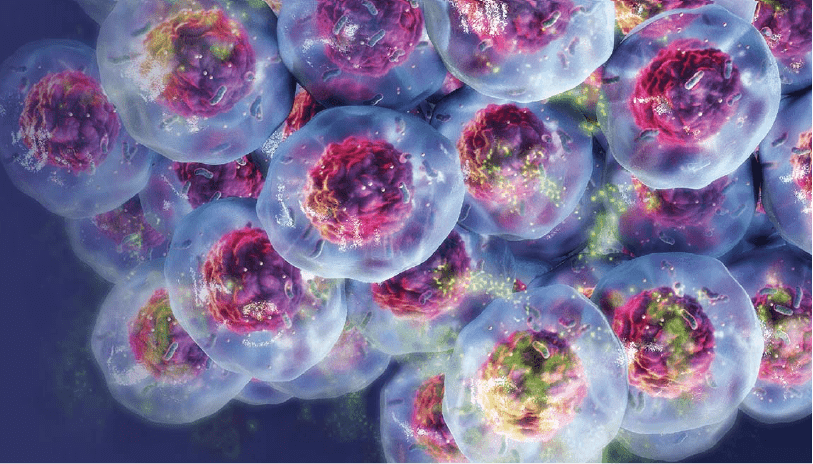
3D Cell Culture Overcomes Limitations of Traditional 2D Methods
Traditional 2D cell culture techniques where cells grow in a monolayer on flat surfaces fail to accurately replicate the complex 3D microenvironment that cells experience in the human body. Cells grown on rigid plastic surfaces have different shapes, behaviors, metabolisms and responses to stimuli compared to how they function in vivo. 3D cell culture methods aim to better mimic the natural 3D architecture and cellular interactions present in living tissue by allowing cells to grow together in all directions to form multi-cellular structures in 3D hydrogels or scaffolds. This provides a more physiologically relevant in vitro model to study cell biology, disease mechanisms and test drug therapies compared to conventional flat and rigid 2D cultures.
Scaffolds and Hydrogels Provide an Extracellular Matrix-Like Environment
3D Cell Culture cells are embedded within synthetic or natural polymer scaffolds or hydrogels that mimic key aspects of the extracellular matrix found in human tissues. Popular scaffold materials include polystyrene, polycaprolactone and collagen while common hydrogels used are based on materials like alginate, polyethylene glycol and hyaluronic acid. These 3D matrices support cell attachment, proliferation, migration and cell-cell communication in all three dimensions similar to real tissues. The physical properties of the scaffold or hydrogel such as stiffness, porosity and degradability can also be tuned to match specific tissue types. This extracellular matrix-like environment results in cell morphologies, behaviors and gene expression profiles that more accurately recapitulate cells in their native tissues compared to 2D cultures.
Spheroids and Organoids Recapitulate Tissue Architecture
Some advanced 3D culture methods produce multicellular aggregates called spheroids or organoids that self-assemble to form miniaturized functional tissues. When various primary cell types such as epithelial and stromal cells are cultured together in 3D under appropriate growth conditions, they spontaneously organize into tissue-like structures and form cell-cell junctions very similar to those seen in specific organs. For example, intestinal and liver organoids contain cell types arranged in physiology-like crypt and villi domains or lobule structures respectively. These 3D tissue models provide a whole new avenue to understand intercellular interactions, tissue development, homeostasis, disease mechanisms and drug screening in a far more clinically relevant and predictive setting than conventional cultures.
Applications in Disease Modeling, Drug Discovery and Regenerative Medicine
Due to their enhanced physiological relevance over 2D cultures, 3D cell models are increasingly applied across diverse areas of life sciences research. In disease modeling, patient-derived cells cultured in 3D can recapitulate aspects of disease pathology, progression and mutations in a way that closely mimics the actual human condition. This enables more predictive preclinical validation of drug targets and biomarkers. 3D cultures are also widely utilized in drug screening where they provide a powerful tool to test drug efficacy and toxicity in a setting that better forecasts clinical outcomes. The tissue-like 3D models are further finding application in developing regenerative therapies by allowing evaluation of cell replacement strategies and tissue engineering approaches pre-clinically. Overall, 3D culture techniques are revolutionizing biomedical research by generating systems that more translationally bridge the gap between conventional 2D assays and whole animal studies.
Advances in 3D Bioprinting Accelerate Tissue Engineering
The emerging field of 3D bioprinting takes 3D cell culture a step further by automating the precise deposition of cells, growth factors and biomaterials layer-by-layer using 3D printing approaches. This facilitates fabrication of complex 3D living tissue constructs with controlled cellular organizations, densities and compositions that better mimic native organs and tissues. Combined with advances in stem cell technology and materials engineering, bioprinting allows production of customized transplantable tissues for regenerative medicine applications. Researchers are developing bioprinted skin, bone, vascular grafts as well as mini-livers, kidneys and heart muscle that show promise for replacing damaged tissues in the human body. The ability to 3D print living tissues in vitro marks a major milestone in the advancement of regenerative therapies and ultimately personalized medicine.
Future Outlook – Integrating Organs-on-Chips, AI and Personalized Models
While 3D cell cultures have come a long way, attaining complete functional and structural complexity equivalent to full organs in vivo remains a challenge. The rapidly emerging field of organ-on-a-chip microdevices utilizes 3D tissue culture techniques, microfluidics and organ level integration to potentially address this gap. By mimicking organ level functions and systemic interactions, ‘organs-on-chips’ aim to realize highly advanced and predictive preclinical platforms. In parallel, application of machine learning and artificial intelligence stands to transform 3D tissue engineering, bioprinting and medical research. AI algorithms can analyze huge amounts of biomolecular and imaging data from 3D cultures to gain novel insights and automate optimization of complex multicellular models. Additionally, incorporation of patient-specific genomes and disease profiles could enable generation of personalized 3D disease and drug response models for precision medicine applications in the future. Overall, integration of 3D cell culture, organ chips, AI and personalized approaches holds immense promise to revolutionize biomedical sciences in the coming decade.
*Note:
1.Source: Coherent Market Insights, Public sources, Desk research
2.We have leveraged AI tools to mine information and compile it