
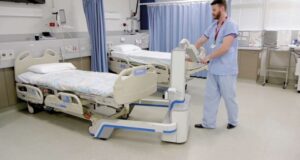
Introduction to Hospital Beds
Hospital beds are a crucial part of inpatient care and treatment. They are designed to provide both comfort and safety to patients admitted to healthcare facilities. There are generally two main types of hospital beds in use – powered and manual hospital beds. Both have their own set of advantages and disadvantages depending on the patient’s condition and needs.
Powered Hospital Beds
Powered hospital beds, also known as electric beds, are operated using remote controls or buttons mounted on the bed frame or side rails. Some key features of powered hospital beds include:
Adjustable Height and Position
One of the main advantages of powered beds is the ability to easily adjust the height and position without physical exertion. Patients can raise or lower the head, knee, or entire bed vertically with the push of a button. This makes getting in and out of bed safer and more comfortable.
Caregiver Assistance
Nurses and caregivers find it more convenient to assist patients using powered beds. Functions like raising the head elevation just the right amount or lowering the bed for procedures can be done precisely and smoothly. This reduces overhead lifting and saves caregiver effort.
Customizable Settings
Many modern powered beds come with programmable preset positions tailored for different activities. For example, a “reading” position can raise the head slightly while a “feeding” one may lift it higher. Caregivers can customize these to suit each patient.
Durability and Safety
The welded steel frame and electrical components of powered beds make them sturdier and safer compared to manual beds. Bed rails that go up and down electronically also reduce risk of falls or injuries compared to manually cranking rails.
Limitations of Powered Beds
Higher Cost
Purchasing and maintaining powered hospital beds is more expensive than manual models. Healthcare facilities need to account for the additional costs.
Potential Technical Issues
While advancements have reduced it, there remains a small risk of technical malfunctions or controller errors affecting bed functions. Manual backups may be needed in emergencies.
Battery Management
Beds require regular electrical charging or battery replacement which adds to overhead. Backups need monitoring in case of power outages.
Manual Hospital Beds
Manual or crank-operated beds are cheaper and lower-tech alternatives. Some distinctions include:
Manual Adjustments
Patients or caregivers need to physically crank levers or handwheels to change the height or position of different bed sections. This requires more effort and time.
Minimal Features
Basic manual beds offer only height adjustment and raising/lowering of the head or foot sections using cranks. Nicer models may have adjustable railings.
Durability
While easier to repair, manual beds rely more on hinges, nuts/bolts and are at higher risk of wear/breakage over years of use compared to powered frames.
Affordability
Initial purchase and maintenance costs of manual beds are significantly lower making them suitable for facilities with budget constraints. No electrical fittings or batteries required.
When to Consider Manual Beds
– Low acuity patients who can help adjust positions.
– Budget-focused settings like nursing homes, rehabilitation facilities.
– Temporary beds for overflow capacity.
– In developing countries with limited access to powered options.
Comparing Powered vs Manual Hospital Beds
Both designs have evolved to serve patient needs better. While powered beds offer optimal comfort, safety and caregiver-assistance, manual beds suffice in some situations due to their affordability. Overall, powered beds are preferable for:
– Immobile/bedridden patients.
– Patients recovering from major surgeries/injuries.
– Facilities dedicated to critical or long-term care.
– High fall risk patients who may need frequent positional changes.
– Technology-enabled “smart beds” enhancing monitoring.
While manual beds work well for mobile patients, choosing appropriately based on intended use-case and setting is important. A hybrid approach using both types judiciously can maximize benefits for patients and healthcare systems.
Conclusion
In conclusion, while manual hospital beds have an important role to play due to their affordability, powered beds provide distinct advantages in adjustability, safety, monitoring ability and ease of caregiver assistance. Comparing powered and manual hospital beds designs continue evolving to serve patients better. An integrated approach based on patient type, intended use and facility capacity helps optimize benefits. Overall, powered hospital beds tend to be preferable for critical, long-term or high acuity care needs.